Knowledge
What is heat exchanger efficiency?
Many descriptions and articles talk about the efficiency of heat exchangers - often without explaining what it actually is and how to calculate it. Let us clarify.
Reviewed by Dipl.-Ing. Wolfgang Buschmeier and M.Sc. Marius Buschmeier
Definition
Heat exchanger efficiency states the ratio between the outlet temperature achieved by a medium being heated or cooled and the physically possible limit. At an efficiency of 100 % the heat exchanger reaches its limiting performance. Since efficiency strongly depends on the operating mode, it is often called the operating characteristic.
The calculation rule
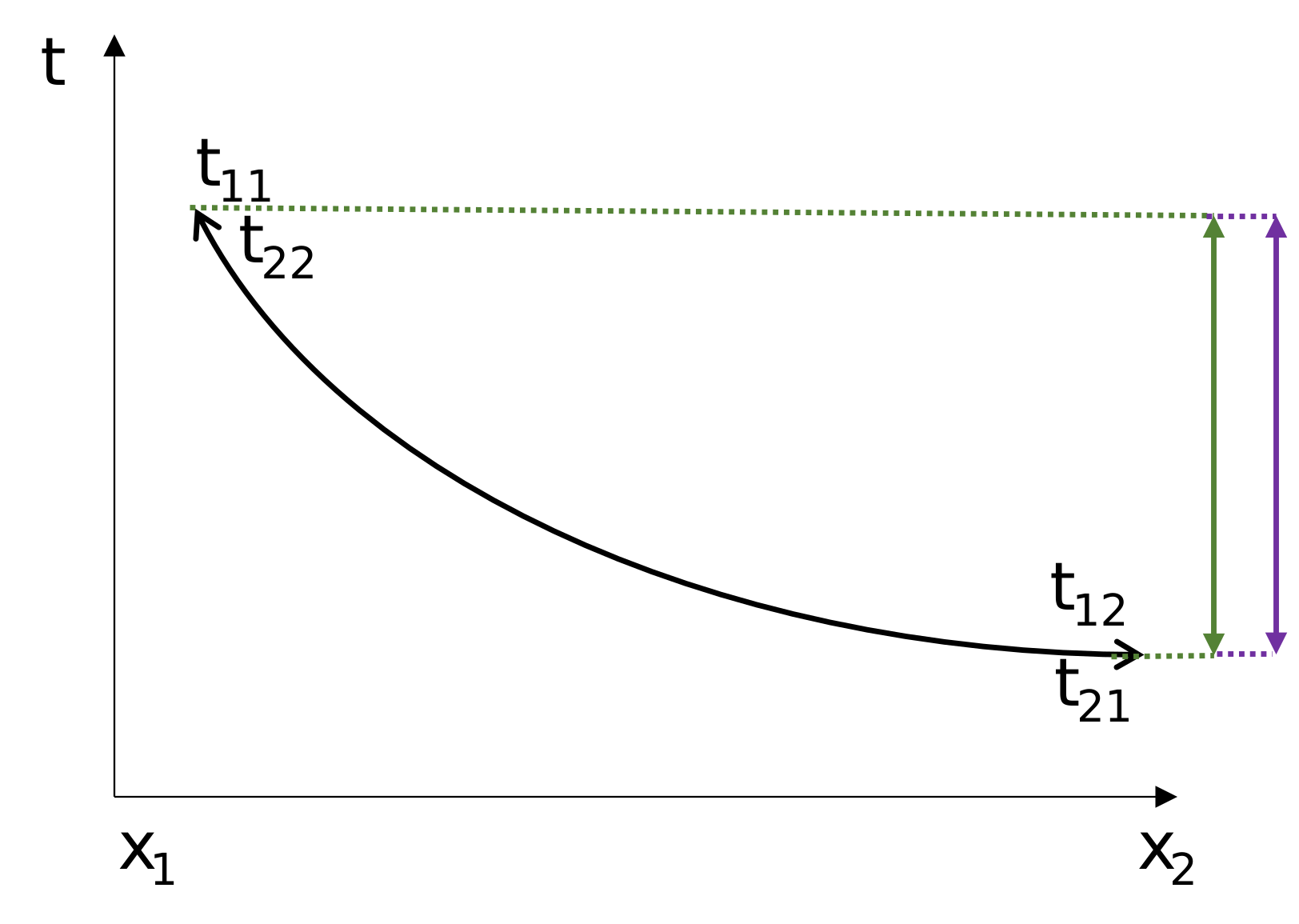
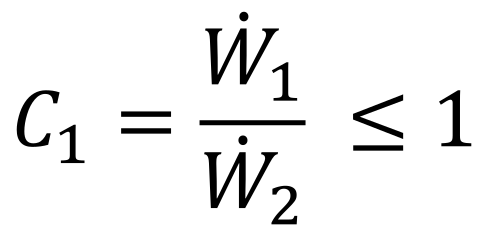
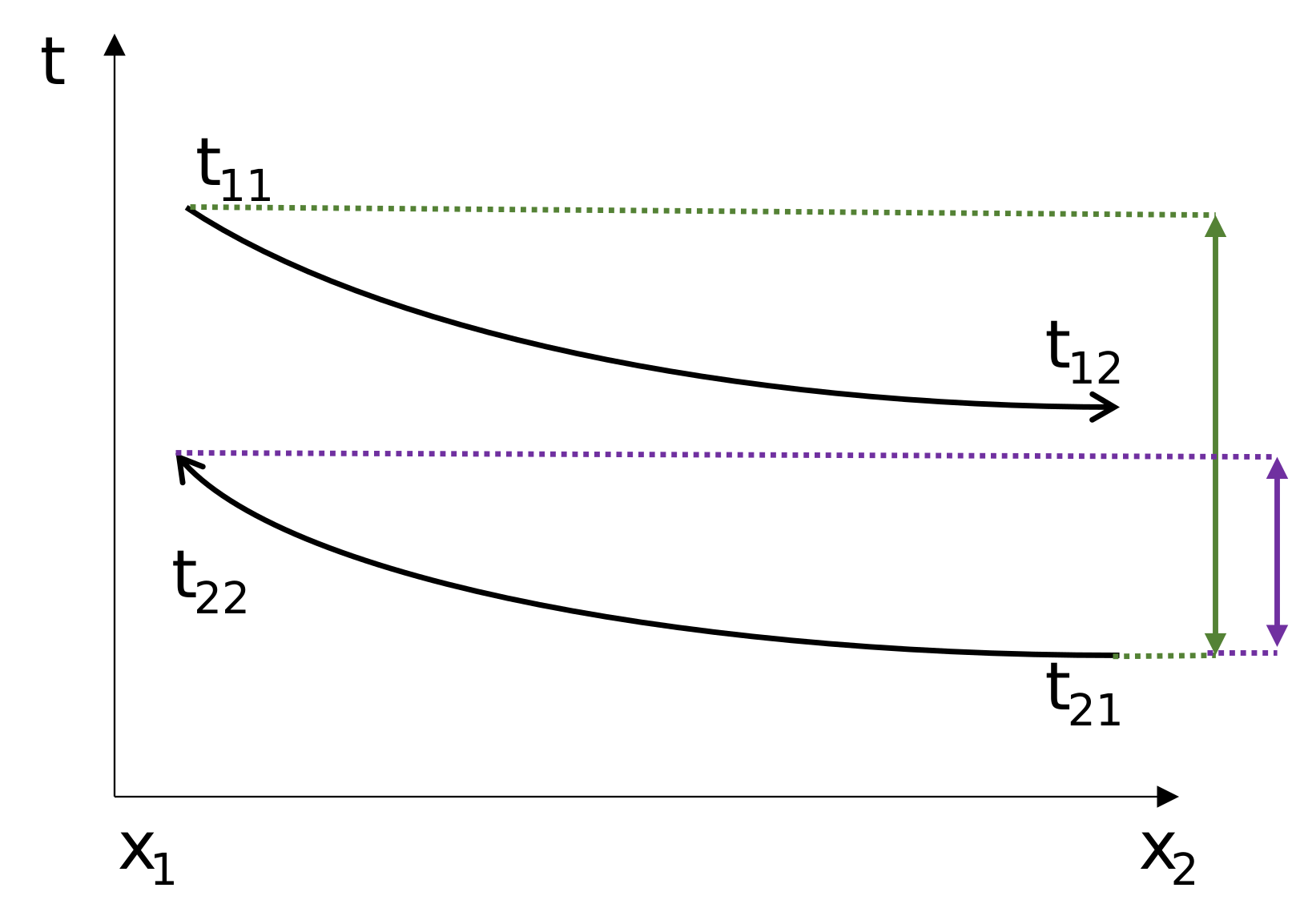
What matters is always the medium with the smaller heat capacity rate: only its temperature can fully approach the inlet temperature of the other medium. Efficiency is the ratio of this medium’s actually achieved temperature change to the maximum possible temperature difference - the difference between the two inlet temperatures.
The formula
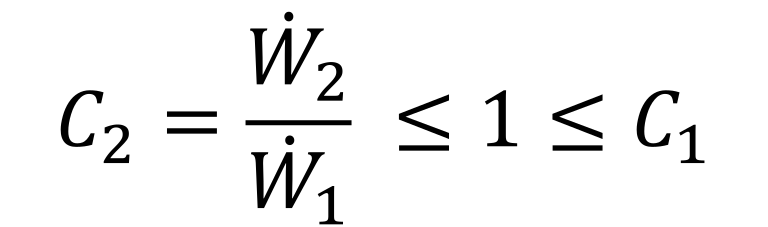
Each medium’s heat capacity rate follows from its mass flow ṁ and specific heat capacity cp:
Ẇ = ṁ · cp
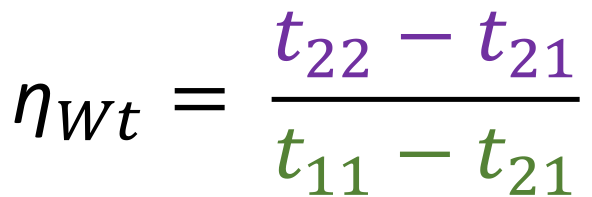
The medium with the smaller Ẇ governs the result. Efficiency η is then - depending on which medium has the smaller heat capacity rate:
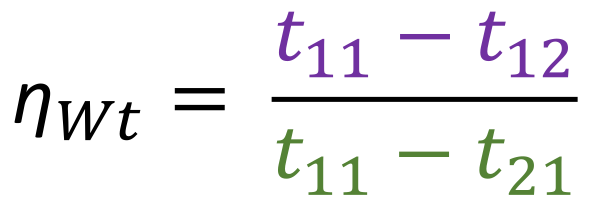
- hot medium governs: η = (t₁₁ − t₁₂) / (t₁₁ − t₂₁)
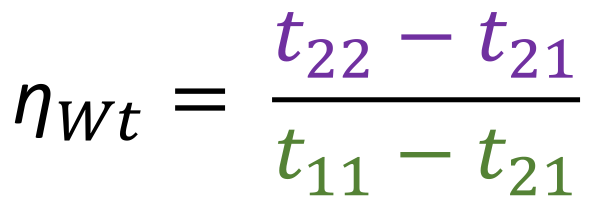
- cold medium governs: η = (t₂₂ − t₂₁) / (t₁₁ − t₂₁)
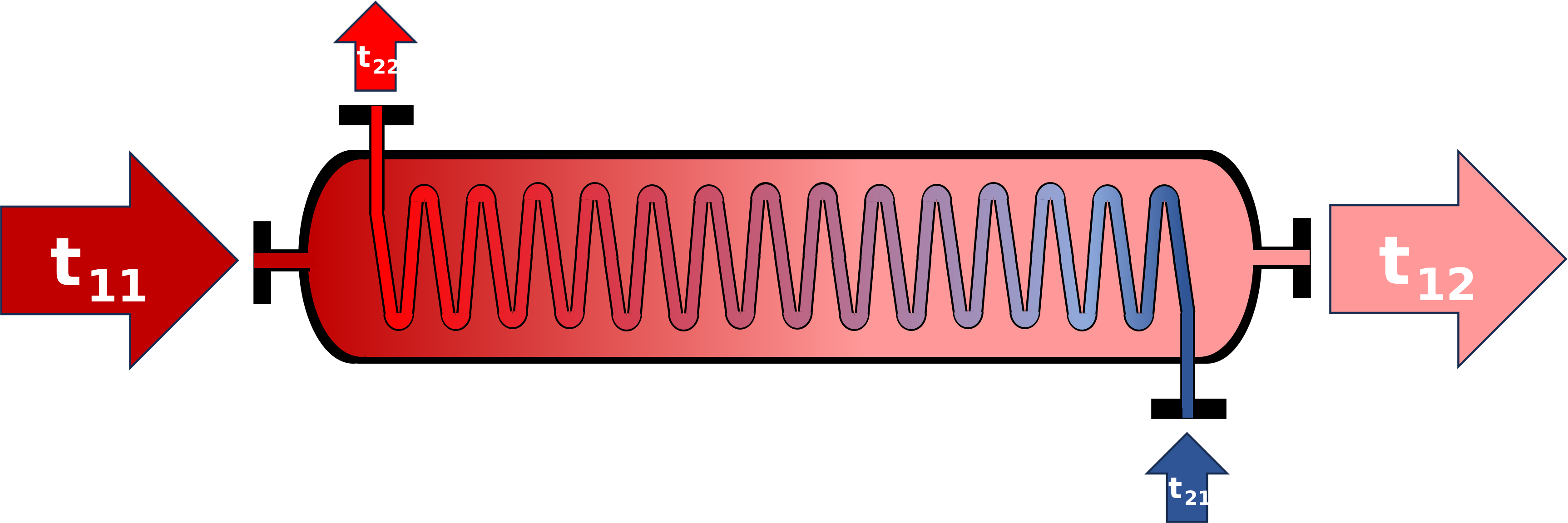
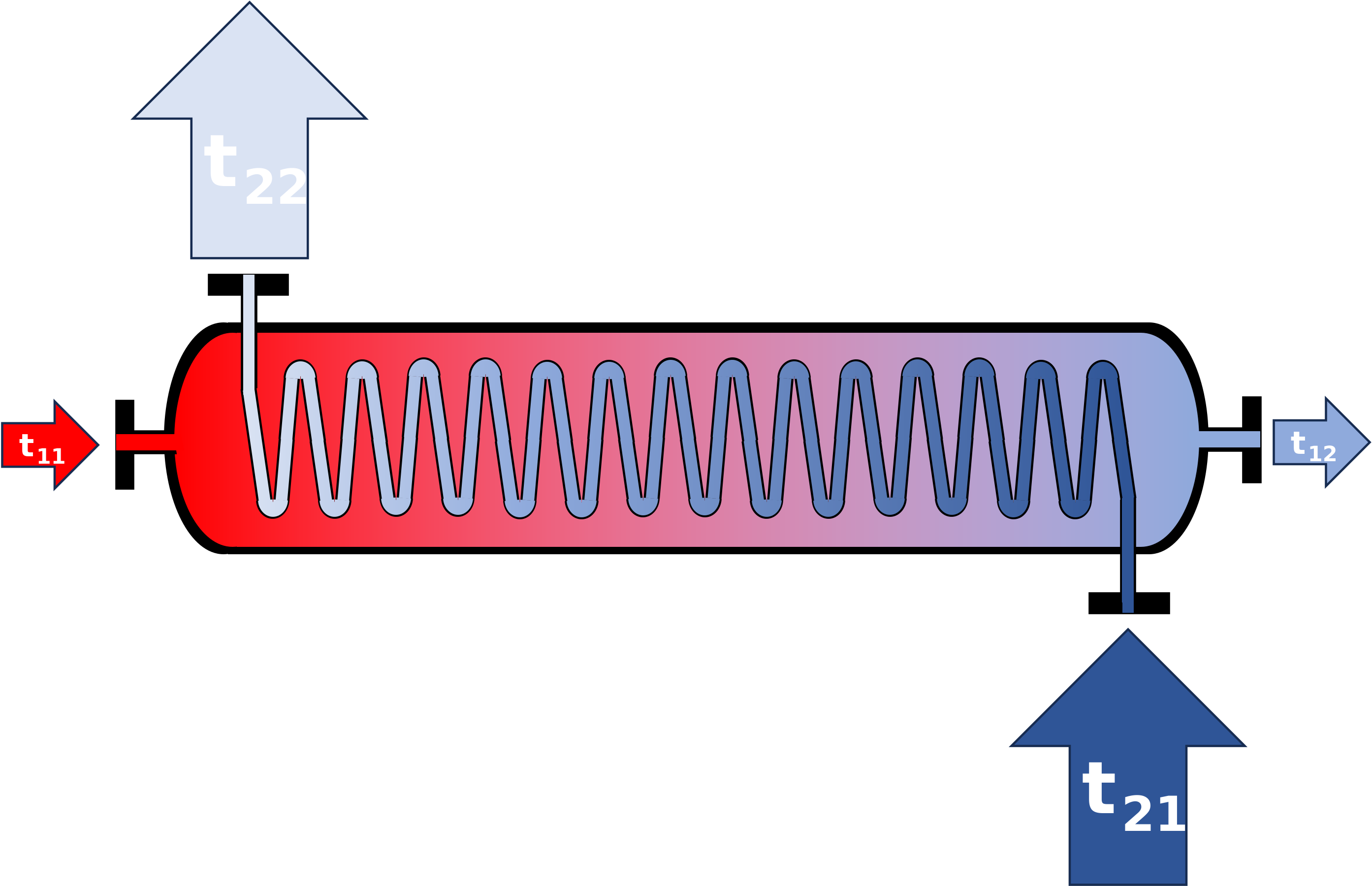
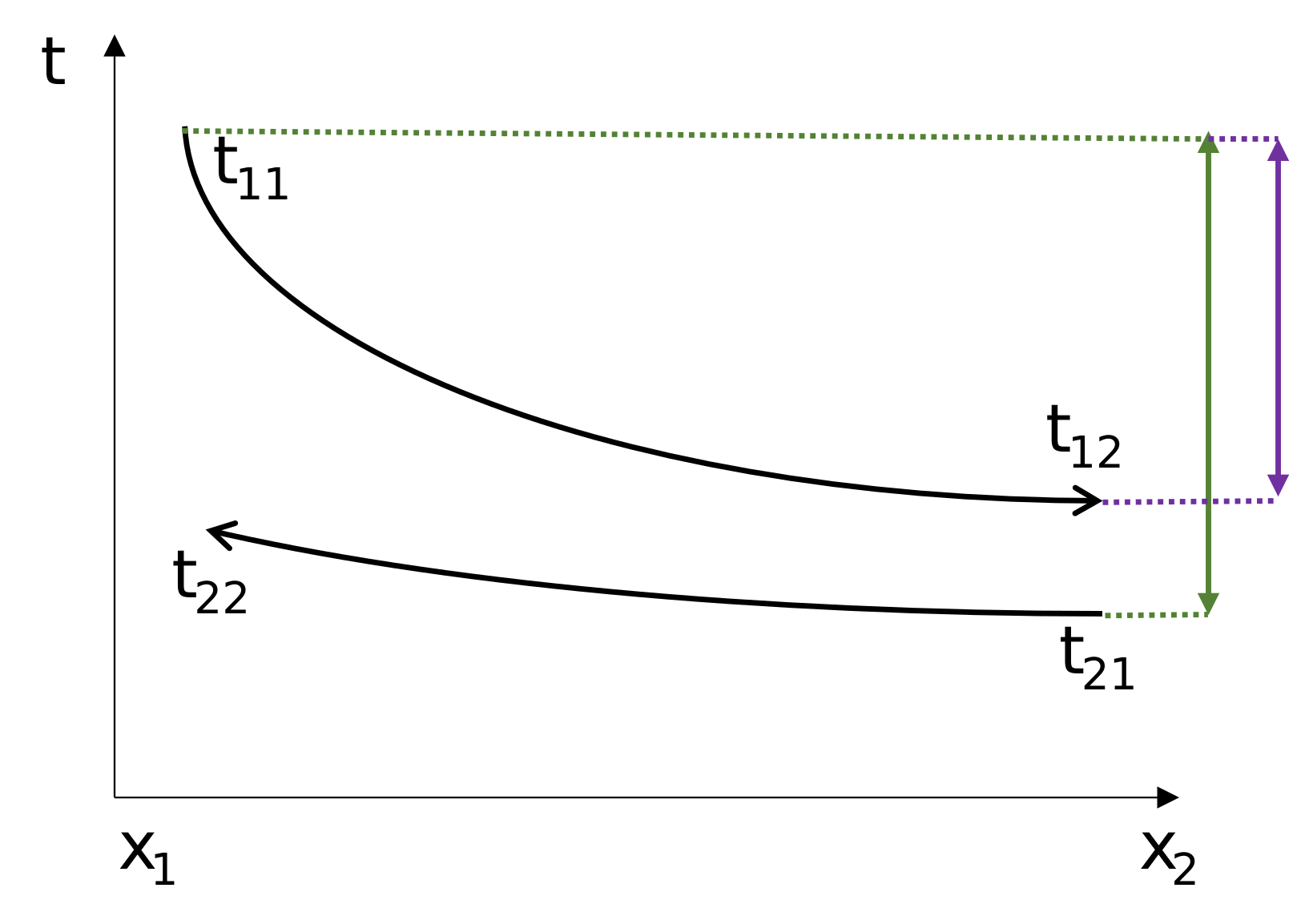
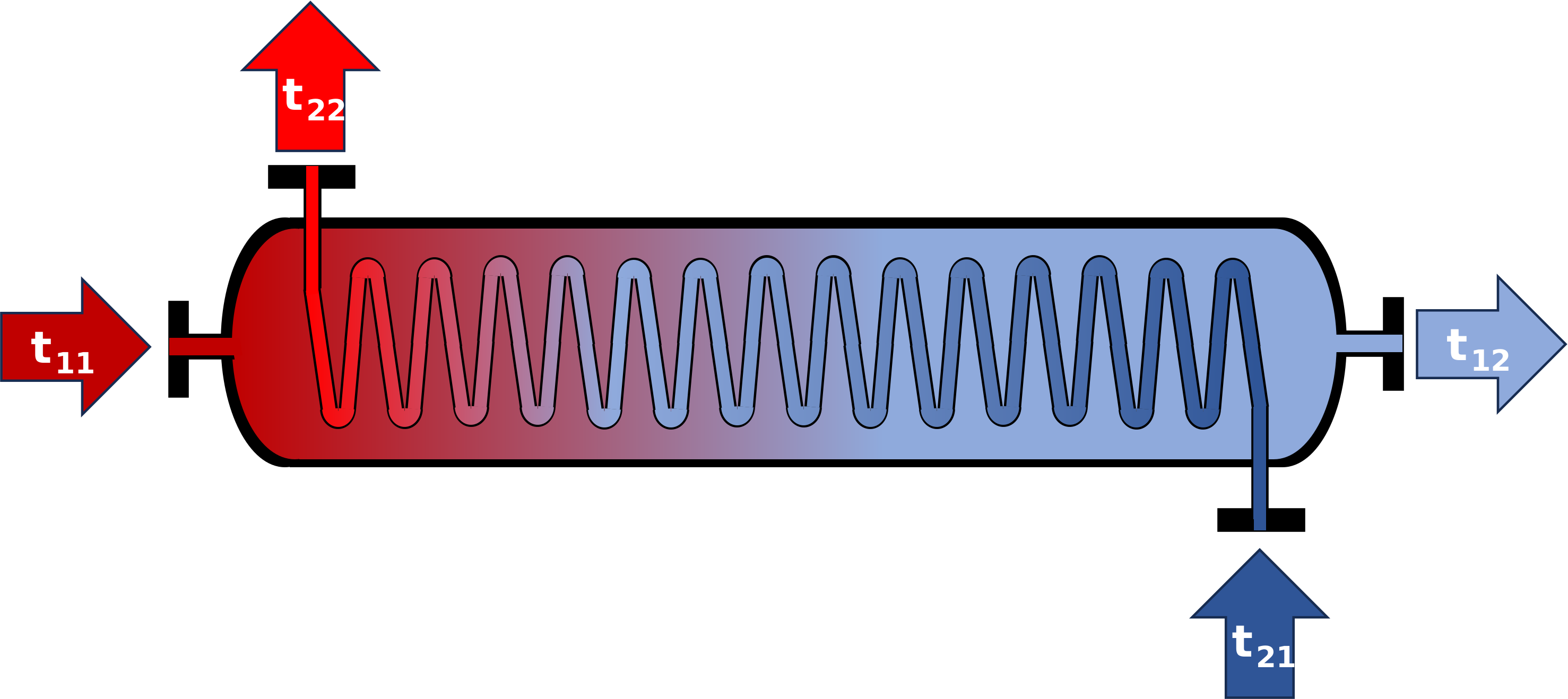
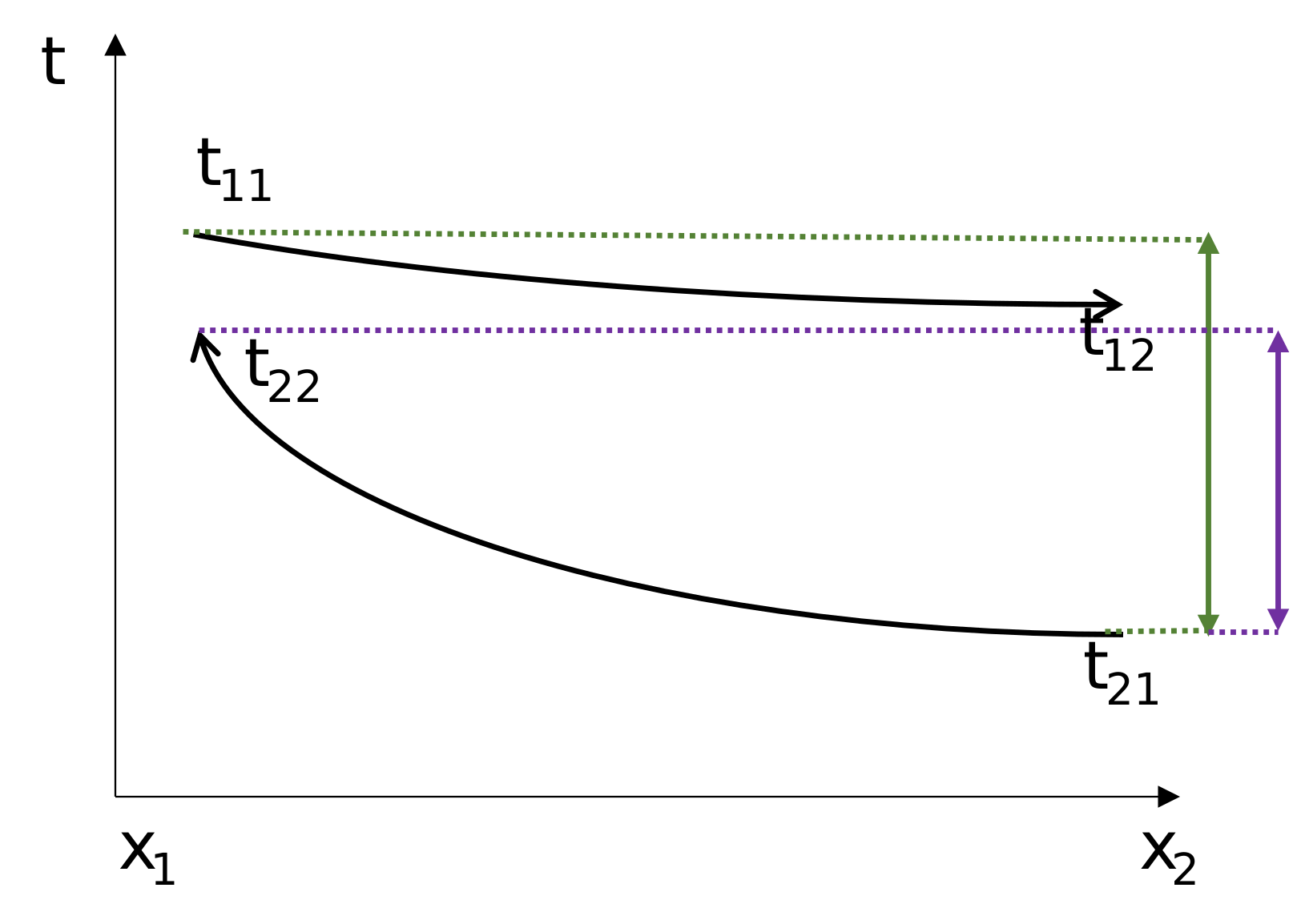
The temperatures denote t₁₁, t₁₂ inlet and outlet of the hot medium, t₂₁, t₂₂ inlet and outlet of the cold medium; t₁₁ − t₂₁ is the maximum possible temperature difference.
Example 1: little hot water, much cold water
Hot water with a small mass flow is to heat cold water with a large mass flow. The “little” hot water is not enough to heat the cold water significantly - but it cools down strongly itself. For the efficiency, all that counts is how closely the hot water’s outlet temperature approaches the cold water’s inlet temperature. With a sufficiently large heating surface, the heat exchanger can thus reach an efficiency of 100 %.
Example 2: much hot water, little cold water
If the hot water’s mass flow is much larger, it hardly loses temperature while the cold water heats up strongly. Now only the cold water’s temperature approach to the hot inlet temperature counts - the outlet temperature of the cooling water is irrelevant.
Example 3: equal heat capacity rates
If both media are equal (say, water with identical mass flow on both sides), both heat capacity rates are equal. Then both calculation paths lead to the same result: the temperature approach is identical on both sides.
In practice: sizing by the manufacturer
The operating characteristic decides which design and heating surface fit your task. Send us your operating data - media, mass flows, temperatures - and we will size the right heat exchanger according to the VDI Heat Atlas.
-
Is a medium to be cooled or heated?
If a medium is to be cooled, it can - with an infinitely large heating surface - reach the temperature of the cooling medium; the reverse applies to heating.
-
Between which media is heat exchanged?
The media determine the specific heat capacity - a substance's ability to store thermal energy. If the cold medium's specific heat capacity is lower than the hot medium's, it heats up less readily under otherwise equal conditions.
-
Which medium has the larger mass flow?
Mass flow and specific heat capacity yield each medium's heat capacity rate - the central quantity of the calculation.
Frequently asked questions
What does heat exchanger efficiency express?
It states the ratio of the achieved outlet temperature of a medium to the physically possible limit. At 100 percent the heat exchanger reaches its limiting performance.
Why is it called the operating characteristic?
Because efficiency strongly depends on how the heat exchanger is operated - with which media, mass flows and temperatures.
Can a heat exchanger reach 100 percent efficiency?
Theoretically yes: with an infinitely large heating surface, the outlet temperature of one medium can fully approach the inlet temperature of the other. In practice efficiency stays below that.
Send us your operating parameters
Media, capacity, temperatures — we size the right heat exchanger and get back to you with a quote.